
Building a successful Minimum Viable Product begins with defining a strong product vision that aligns with both business objectives and user expectations. This vision serves as a roadmap that guides important decisions, including selecting essential features and shaping the overall user experience.
An MVP is a simplified version of a software or app idea that focuses on solving a specific problem while allowing businesses to test assumptions, attract early adopters, and measure market interest before committing to full-scale development.
This article explores the concept of MVPs, highlights their key benefits, and provides practical guidance on building one successfully. It also explains how software development companies can measure MVP performance and examines real-world examples of MVPs that helped transform startup ideas into successful technology products.
What is a Minimum Viable Product?
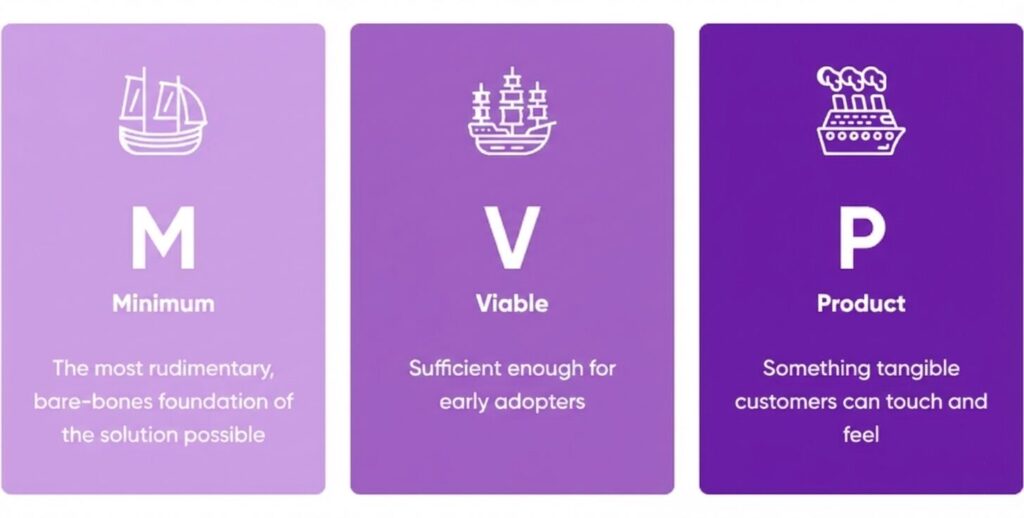
A Minimum Viable Product, commonly known as an MVP, is the most basic version of a product that includes only the essential features required to solve a core customer problem. Its main goal is to test the product concept while using minimal development time, cost, and resources.
The concept of MVP was introduced by Frank Robinson and later gained popularity through Eric Ries’ Lean Startup methodology. The MVP approach helps businesses gather early user feedback and validate product ideas without making heavy financial investments.
When developing an MVP, businesses concentrate on delivering core functionality that allows them to evaluate real market demand. This early validation often supports funding opportunities and helps shape a clear product development roadmap.
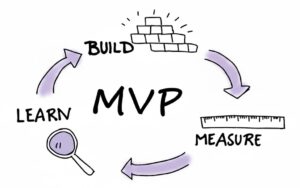
The MVP strategy follows agile development principles by focusing on launching a functional product quickly. This allows businesses to enter the market faster, collect user insights, and improve the product based on real customer feedback.
How to Build an MVP in 9 Steps?
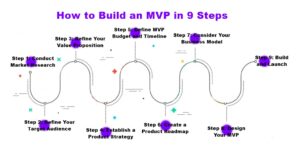
Creating a Minimum Viable Product is one of the smartest ways to turn a software idea into a real, testable solution without investing excessive time and resources upfront. Instead of building a fully featured product immediately, businesses focus on developing a simplified version that delivers core value to users.
This approach allows companies to validate their concept, gather valuable feedback, and reduce risks before scaling. Below is a structured step-by-step guide to help you plan, design, and launch an effective MVP.
Step 1: Conduct Market Research
The first step in building a successful MVP is understanding your market. Begin by researching your target users, competitors, and industry trends. Identify common user challenges, evaluate existing solutions, and analyze market gaps. This process helps validate your business idea and highlights opportunities to position your product differently from competitors.
Step 2: Define Your Target Audience
Clearly identifying your target audience helps ensure your MVP solves the right problem for the right users. Create detailed audience profiles that outline shared characteristics, goals, behaviors, and major pain points. Tools such as social media insights, surveys, and analytics platforms can provide valuable data for building accurate customer personas.
Step 3: Refine Your Value Proposition
Use insights from your research to shape a strong value proposition. Your product should clearly communicate how it solves customer problems and what makes it different from existing solutions. A strong value proposition helps attract early adopters and supports long-term product positioning.
Step 4: Establish a Product Strategy
Develop a clear product strategy that outlines your goals and the steps required to achieve them. A well-defined strategy keeps development teams aligned with business objectives and ensures resources are focused on delivering maximum value.
Step 5: Define MVP Budget and Timeline
Setting a realistic budget and timeline helps guide development decisions. Even rough estimates allow teams to prioritize essential features and maintain focus on delivering the MVP efficiently. Clear planning also helps prevent unnecessary development costs and delays.
Step 6: Create a Product Roadmap
A product roadmap provides a visual overview of your MVP’s key features and priorities. It helps stakeholders understand development goals and ensures teams stay focused on delivering the minimum feature set required for launch and future updates.
Step 7: Consider Your Business Model
Although many MVPs focus on validation rather than revenue generation, defining a potential business model is important. Consider pricing strategies, monetization options, and long-term revenue goals. Early planning helps guide future product development and financial sustainability.
Step 8: Design Your MVP
During the design phase, continue validating product decisions through user feedback and prototype testing. Develop user journeys that ensure smooth navigation and positive user experiences. While MVPs focus on minimal functionality, modern and professional design helps build user trust and encourages engagement.
Step 9: Build and Launch
Work closely with your development team to transform your MVP concept into a functional product. After development, launch your MVP and begin gathering real user feedback. Monitor performance metrics, analyze user behavior, and identify areas for improvement. This stage allows businesses to refine their product based on actual market response.
Business Benefits of Developing an MVP
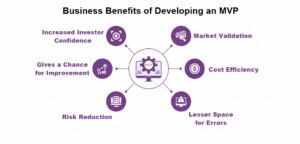
Building a Minimum Viable Product provides several strategic advantages for startups and businesses entering the digital market. Instead of committing large budgets and time to full product development, MVPs allow companies to test ideas, gather feedback, and make informed decisions. This approach supports smarter development planning and reduces the chances of product failure.
1. Market Validation
One of the biggest advantages of an MVP is the ability to test your product idea with real users. Early user feedback helps businesses understand whether their solution meets actual market needs. This validation allows teams to refine features, improve usability, and ensure the product aligns with customer expectations.
2. Gives a Chance for Improvement
MVPs support an agile development process where products are built, tested, and improved in stages. By focusing only on essential features during the initial launch, businesses can quickly release their product and continuously improve it based on user insights and performance data.
3. Risk Reduction
Developing a full product without validation can lead to significant financial and operational risks. MVPs reduce these risks by allowing businesses to test assumptions early. If improvements or strategic changes are required, teams can make adjustments before investing heavily in development.
4. Increased Investor Confidence
Launching an MVP provides proof that your product idea has real potential. Demonstrating early user adoption and engagement helps build trust with investors. This often increases the chances of securing funding for further product development and expansion.
5. Cost Efficiency
MVP development focuses only on building essential features, which helps control development costs. Businesses can allocate resources more effectively and avoid spending money on features that may not deliver value to users.
6. Lesser Space for Errors
An MVP limits mistakes by testing core features early. Real user feedback reveals issues quickly, allowing teams to fix problems before scaling. This reduces rework, saves costs, and leads to a more stable final product.
Final Thoughts
Building successful Minimum Viable Products is not just about launching quickly; it is about launching strategically. An MVP helps businesses validate ideas, understand customer needs, and reduce development risks before investing in a full-scale product. By focusing on core functionality, gathering user feedback, and continuously improving the product, businesses can create solutions that are both market-ready and scalable.
Following a structured MVP development approach allows startups and enterprises to make data-driven decisions, optimize development costs, and accelerate time to market. From market research and product strategy to design, development, and launch, every stage of MVP creation plays a critical role in shaping long-term product success.
Partnering with an experienced development team can further simplify the MVP journey. At TekInvent, we help businesses transform innovative ideas into functional, user-focused MVPs that support growth, validation, and scalability. Whether you are building a web platform, mobile app, or digital solution, a well-planned MVP can become the foundation of your product’s long-term success.

Build Smart with The Right Team.
We bring expertise, technology, and trust you look for in your digital journey.